
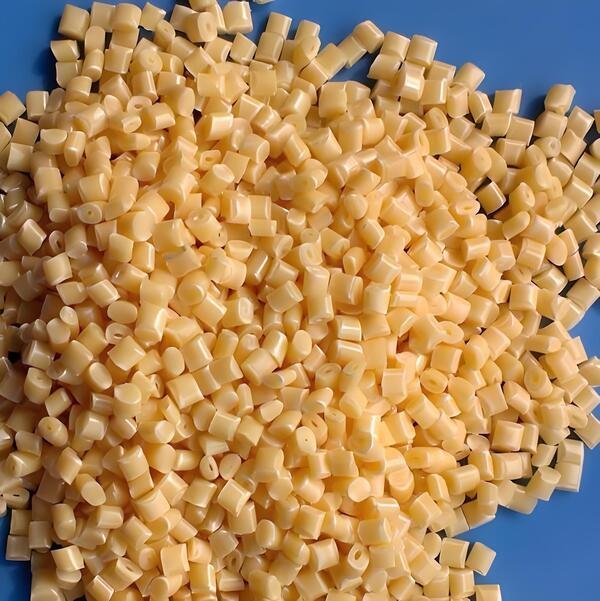
Selecting the right material is one of the most important decisions in plastic gear design.
A gear may have the correct tooth profile and dimensions, but if the material does not match the operating conditions, it can still fail through excessive wear, deformation, noise, heat buildup, or dimensional change.
POM, PA66, and PEEK are three commonly considered materials for custom plastic gears. Each has different strengths, limitations, processing requirements, and cost levels.
This guide compares POM, PA66, and PEEK to help engineers select a suitable gear material for robotics, automation equipment, motion-control systems, consumer devices, and industrial applications.
Start with the Application, Not the Material Name
There is no single “best” plastic gear material.
The correct choice depends on the complete operating environment, including:
- Transmitted torque
- Peak load and shock load
- Rotational speed
- Duty cycle
- Operating temperature
- Required gear accuracy
- Noise target
- Lubrication condition
- Mating gear material
- Chemical exposure
- Humidity and moisture exposure
- Required service life
- Annual production quantity and target cost
A low-cost material may be the best option for a light-duty actuator. A high-performance material may be necessary for a high-temperature industrial mechanism. Material selection should always be combined with gear geometry, mold design, tolerance requirements, and testing.
POM Gears: A Strong General-Purpose Choice
POM, also called acetal, is one of the most widely used materials for precision injection-molded gears.
It is often the first material engineers consider for small and medium-duty gears because it offers a balanced combination of wear resistance, dimensional stability, low friction, and cost efficiency.
Key Advantages of POM
- Good wear resistance
- Low coefficient of friction
- Good dimensional stability
- Low moisture absorption
- Good fatigue resistance for many gear applications
- Quiet operation compared with metal-to-metal gear contact
- Good moldability for repeat-volume production
- Cost-effective compared with high-performance engineering plastics
Typical Applications for POM Gears
POM gears are commonly used in:
- Small robotic mechanisms
- Smart home devices
- Office equipment
- Consumer appliances
- Automotive actuators
- Light-duty automation equipment
- Small gearboxes
- Sensor positioning mechanisms
- Compact motion-control assemblies
Limitations of POM
POM is not ideal for every environment.
It may not be suitable when the application has:
- Continuous high operating temperatures
- Very high transmitted torque
- Severe impact loading
- Strong chemical exposure
- High-speed conditions that generate excessive heat
- Extremely demanding flame-retardant requirements
For many standard precision gear projects, however, POM provides an excellent balance between performance and cost.
PA66 Gears: Toughness and Strength for Higher-Load Applications
PA66, also known as nylon 66, is commonly used when a gear requires greater toughness, strength, and resistance to impact than standard POM can provide.
PA66 can be used in demanding mechanical applications, especially where shock load and higher load capacity are important.
Key Advantages of PA66
- Good mechanical strength
- Good toughness
- Good impact resistance
- Good wear resistance
- Suitable for many higher-load gear applications
- Can be reinforced with glass fiber for increased stiffness and strength
- Widely available and cost-effective for many industrial uses
Typical Applications for PA66 Gears
PA66 gears may be considered for:
- Industrial automation equipment
- Power tool components
- Automotive mechanisms
- Medium-load actuator systems
- Conveyor and transmission components
- Gearboxes with higher shock loads
- Mechanical assemblies requiring toughness
Important Consideration: Moisture Absorption
One of the most important factors when using PA66 is moisture absorption.
Nylon absorbs more moisture than POM. This can affect dimensions, stiffness, strength, and gear backlash over time.
For precision gear applications, engineers should consider:
- Storage condition
- Operating humidity
- Dimensional tolerance
- Conditioning process
- Mating component tolerance
- Long-term backlash requirements
Glass-fiber-reinforced PA66 can improve stiffness and strength, but it may also influence surface finish, wear behavior, mold shrinkage, and noise performance.
PA66 is often a good option when toughness and load capacity are more important than the highest possible dimensional stability.
PEEK Gears: High Performance for Demanding Environments
PEEK is a high-performance engineering plastic used in applications that require excellent thermal resistance, chemical resistance, mechanical performance, and long-term reliability.
It is significantly more expensive than POM or PA66, so it is usually selected only when the operating environment justifies the additional cost.
Key Advantages of PEEK
- Excellent high-temperature resistance
- Very good mechanical strength
- Good wear and fatigue performance
- Excellent chemical resistance
- Good dimensional stability
- Suitable for demanding industrial environments
- Can perform well in applications where standard engineering plastics are not sufficient
Typical Applications for PEEK Gears
PEEK gears may be considered for:
- High-temperature industrial equipment
- Aerospace components
- Medical equipment
- Semiconductor manufacturing equipment
- Chemical processing systems
- High-performance automation equipment
- Specialized motion-control systems
Limitations of PEEK
The main limitation of PEEK is cost.
Material cost, processing requirements, and tooling considerations are usually higher than for POM or PA66. PEEK should not be selected simply because it is a premium material.
If POM or PA66 can meet the load, temperature, wear, and service-life requirements, they may provide a more cost-effective solution.
Quick Comparison: POM vs. PA66 vs. PEEK
| Property | POM | PA66 | PEEK |
|---|---|---|---|
| Wear resistance | Good | Good | Very good |
| Friction performance | Good | Good | Good |
| Dimensional stability | Very good | Moderate; affected by moisture | Very good |
| Moisture absorption | Low | Higher | Low |
| Impact resistance | Good | Very good | Good |
| High-temperature resistance | Moderate | Good | Excellent |
| Chemical resistance | Good in many environments | Good in many environments | Excellent |
| Cost level | Low to medium | Medium | High |
| Best fit | Precision, low-noise, moderate-load gears | Tougher, higher-load applications | High-temperature or demanding environments |
This table is a general comparison only. Actual material performance depends on the specific grade, filler content, gear geometry, molding conditions, mating material, lubrication, and operating environment.
A Practical Material Selection Guide
Choose POM when:
- You need good dimensional stability.
- Low noise is important.
- The application has moderate load and temperature.
- Low friction and wear resistance are required.
- The project needs a cost-effective precision gear.
- Moisture exposure is a concern.
Choose PA66 when:
- The gear needs higher toughness or impact resistance.
- The application has higher load or shock load.
- A reinforced material may be needed.
- The design can accommodate moisture-related dimensional change.
- The application is industrial rather than highly precision-sensitive.
Choose PEEK when:
- The operating temperature is too high for POM or PA66.
- Chemical resistance is critical.
- The application is high value or performance critical.
- Long-term reliability in a demanding environment is required.
- Higher material cost is acceptable.
Material Selection Is Only One Part of Gear Performance
Even the best material can fail if the gear design is not optimized.
A complete gear review should also consider:
- Tooth profile
- Module or diametral pitch
- Pressure angle
- Number of teeth
- Face width
- Root radius
- Backlash
- Center distance
- Shaft and housing tolerances
- Mating gear material
- Lubrication
- Injection molding shrinkage
- Inspection method
- Expected service life
For plastic gears, material selection and gear geometry must be developed together.
How LiCoom Motion Supports Custom Plastic Gear Projects
LiCoom Motion supports custom injection-molded plastic gear projects for robotics, automation equipment, motion-control systems, consumer products, and industrial assemblies.
We can help review:
- POM, PA66, PEEK, and other material options
- Gear geometry and tooth profile
- Load and operating conditions
- Moldability and shrinkage considerations
- Tolerance and backlash requirements
- Prototype sampling and mass-production planning
If you are selecting a material for a new plastic gear project, send us your 2D drawing, 3D model, annual quantity, operating temperature, torque requirement, and application details.
Our team will help evaluate a practical material and manufacturing solution for your project.
Request a Plastic Gear Material Review
Need help selecting the right material for a custom plastic gear?
Contact LiCoom Motion with your drawing and application requirements. We provide engineering support for custom POM gears, PA66 gears, PEEK gears, and other precision injection-molded gear solutions.