
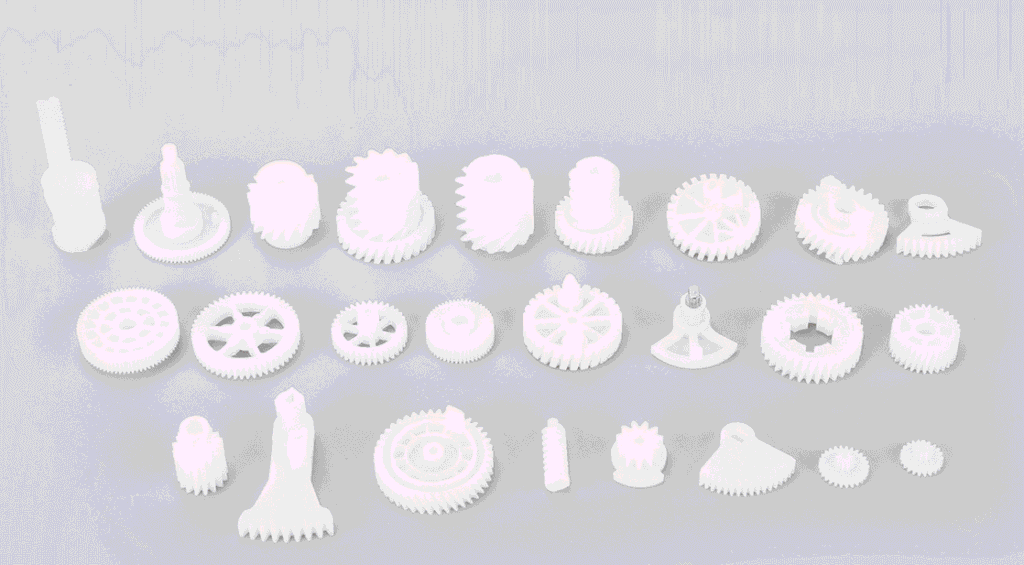
Quick answer: A plastic gear assembly combines multiple precision-molded gears, shafts, bearings, and a housing into one tested, ready-to-install motion subsystem — instead of shipping loose gears that the buyer must assemble and validate themselves. For OEMs in automotive, robotics, and smart home, sourcing a complete assembly from one manufacturer reduces tolerance-stacking risk, cuts integration time, and puts quality accountability in a single supplier’s hands.
If you design actuators, motors, or motion-control modules, you already know the real engineering challenge isn’t a single gear — it’s how a full gear train behaves together. Backlash, noise, and wear are almost always assembly-level problems, not single-part problems. That’s why more procurement and engineering teams are shifting sourcing strategy from “buy gears” to “buy a validated sub-assembly.”
What Is a Plastic Gear Assembly?
A plastic gear assembly is a multi-component motion module built around one or more precision plastic gears, typically including:
- A gear train (spur, helical, worm, or planetary gears working together)
- Shafts and bushings that hold gear alignment under load
- A molded housing or gearbox shell that fixes center distances and protects the train
- Bearings or bushings for shaft support and reduced friction
- Optional motor or output shaft integration for a drop-in module
The distinction matters. A single gear is a component. An assembly is a system — and system performance depends on how well every part works together, not just how good any one part is.
Why More Buyers Are Sourcing Assemblies Instead of Loose Gears
1. Tolerance stacking is an assembly problem, not a single-part problem
Each gear, shaft, and housing can measure within spec individually and still produce excessive backlash or noise once assembled, because tolerances stack across the whole gear train. When one manufacturer designs, molds, and assembles every component together, center distances and tooth engagement are controlled as a system — not left to chance during the buyer’s own assembly line.
2. One point of accountability
When gears, shafts, and housings come from different suppliers, a noise or wear failure triggers a finger-pointing exercise: is it the gear, the shaft, the housing tolerance, or the assembly process? Sourcing the full assembly from one manufacturer means one supplier owns the outcome — and one supplier who tests the finished module, not just the parts.
3. Faster integration, shorter time-to-line
A tested, drop-in gearbox or gear-train module lets an OEM’s engineering team skip in-house assembly, fixture-building, and validation testing. For teams running tight NPI (new product introduction) timelines, this can shave weeks off a program.
4. Lower total cost, even at a higher unit price
A loose gear is often cheaper per part — until you count the labor, fixtures, in-house testing, and scrap rate of assembling and validating gear trains internally. Buyers increasingly evaluate landed cost of a working subsystem, not just piece price of a component.
What LiCoom Motion’s Assembly Capability Includes
LiCoom Motion designs and manufactures both individual precision plastic gears and complete gear assemblies for automotive, robotics, and smart home customers, built around:
- Micron-level molding on Japanese-imported electric injection machines, so every gear in the train meets tight tolerance before assembly even begins
- Material engineering across POM, Nylon, and PC, selected per gear position for strength, wear resistance, or self-lubrication needs
- In-house tooling and mold library, so gear geometry, shaft bosses, and housing features are designed to fit together from day one — not adapted after the fact
- Assembly-level testing, including running-torque, noise, and cycle-life checks on the finished module, not just incoming-part inspection
This is the same manufacturing base behind LiCoom Motion’s automotive-grade actuator components — including headlight adjustment, side-mirror fold, trunk lock, and electronic parking brake systems — where a finished, tested actuator gear train is the deliverable, not a bag of parts.
Where Assemblies Matter Most
Automotive actuators — Headlight leveling, mirror-fold, and parking-brake actuators depend on a gear train that performs identically across thousands of units. Assembly-level testing catches variation that piece-part inspection cannot.
Robotics joints and small motion modules — Compact robotic arms, service robots, and lab automation equipment need a gearbox that’s quiet, backlash-controlled, and ready to bolt onto a motor shaft — not a set of parts requiring in-house fixture design.
Smart home actuators — Robot vacuum drive assemblies, motorized blinds, and smart lock mechanisms all depend on quiet, low-friction gear trains where noise is a customer-facing quality signal, not just a spec sheet number.
A Buyer’s Checklist: Evaluating a Plastic Gear Assembly Supplier
Before sourcing a gear assembly manufacturer, ask:
- Does the supplier mold the gears and design the housing/shaft interfaces, or only assemble bought-in parts?
- Is there documented assembly-level testing — running torque, noise (dB), and cycle-life — not just individual part inspection?
- Can they provide material rationale for each gear position, rather than a single default resin across the whole train?
- Do they support DFM (design for manufacturability) feedback at the prototype stage, before tooling is cut?
- Can they show traceability from raw resin lot to finished assembly for automotive or safety-relevant applications?
A supplier that can answer all five with specifics — not general reassurance — is set up to deliver a working subsystem, not just parts that happen to fit together on paper.
Frequently Asked Questions
What’s the difference between a plastic gear and a plastic gear assembly? A plastic gear is a single molded component. A plastic gear assembly is a complete, tested motion module — gears, shafts, bearings, and housing — engineered and validated to work together as a system.
Is it more expensive to buy a gear assembly than individual gears? The per-unit price is usually higher, but total cost is often lower once in-house assembly labor, fixtures, testing, and scrap from tolerance-stack issues are included.
Can LiCoom Motion integrate a motor into the gear assembly? Yes. LiCoom Motion supports motor and output-shaft integration so buyers receive a drop-in module rather than a set of loose components.
What materials are used in LiCoom Motion’s gear assemblies? Assemblies are engineered per application using POM, Nylon, and PC, with material selected by gear position based on load, wear, and self-lubrication requirements.
Do assemblies come with test data? Yes. LiCoom Motion tests finished assemblies for running torque, noise, and cycle life, in addition to incoming inspection on individual gears.
Sourcing a plastic gear assembly for your next program? LiCoom Motion designs, molds, and assembles precision plastic gear trains for automotive, robotics, and smart home applications — tested as a finished module, not shipped as loose parts. Get a quote or explore our Plastic Gear Assemblies category.